As promised in the previous Blog post, with its overview of my recent trip to Naples, I now bring you a post that concentrates entirely on Pompeii and Herculaneum, both of which I visited from Naples as day excursions during that recent trip.
Both places were wealthy ancient Roman cities that were destroyed in a catastrophic two-day eruption of nearby Mount Vesuvius in (probably) October 79 CE. The first phase of the eruption produced a gigantic column of pumice and volcanic ash, which, when it collapsed, began to rain down volcanic material mainly over Pompeii, whereas Herculaneum was hardly affected by this first phase (as it was upwind). As the disaster unfolded, large parts of the population (estimated to have been around 20,000 in total) managed to flee, though a significant number of its inhabitants were still present when the second eruptive phase began the next day with several pyroclastic flows/surges that caused further damage, deposited yet more volcanic material and killed the remaining people still within their range. eventually the whole city was buried under meters of ash and pumice. It’s regarded as one of the worst volcanic disasters in history.
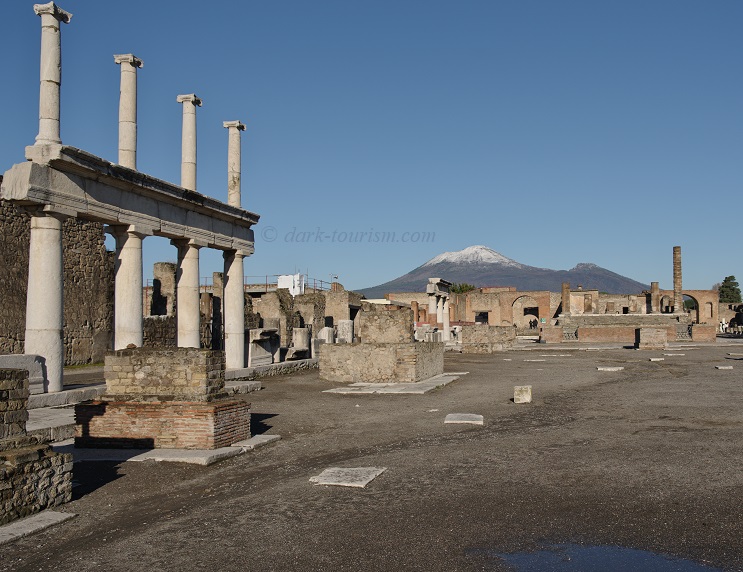
To begin with here’s a photo of the Forum of Pompeii, with Mount Vesuvius, the “culprit” of the deadly disaster, looming large in the background (with snow on its main peak, as it was a pretty cold day when I was there in January):
.
.
Before I carry on I should probably explain why such ancient sites are even covered here, when my normal time frame for inclusion in the concept of dark tourism is the modern era. On my main website as well as on this Blog I do normally apply that principle, but Pompeii (and a small number of other places) are granted exception status. In my chapter about the general concept of dark tourism I put forward some arguments for the inclusion of Pompeii (and the same applies to Herculaneum); I quote (slightly shortened):
- It is very much on the modern tourism itinerary, well-developed for handling crowds and with all the trimmings of modern mass tourism paraphernalia such as souvenir shops, guided tours, etc.
- The cultural significance of the place aside, a major element of why visitors are attracted to the place is indeed its visibly dark side as a site of violent death. Many visitors come first and foremost to see those “petrified” corpses (actually plaster casts) of the victims of the volcanic disaster. A strong element of “morbid attraction” very much forms part of the Pompeii experience.
- The area around Mt Vesuvius is still a volcanic risk area – i.e. the threat of disaster is quite contemporary. This adds a very real connection of the historical site of Pompeii to the dangerousness of the mountain today. Furthermore, visits to Pompeii are often combined with a trip to the crater rim of Mt Vesuvius itself – clearly for the thrill that comes from knowing that it was the cause of the Pompeii disaster back then (and that it threatens to do it yet again).
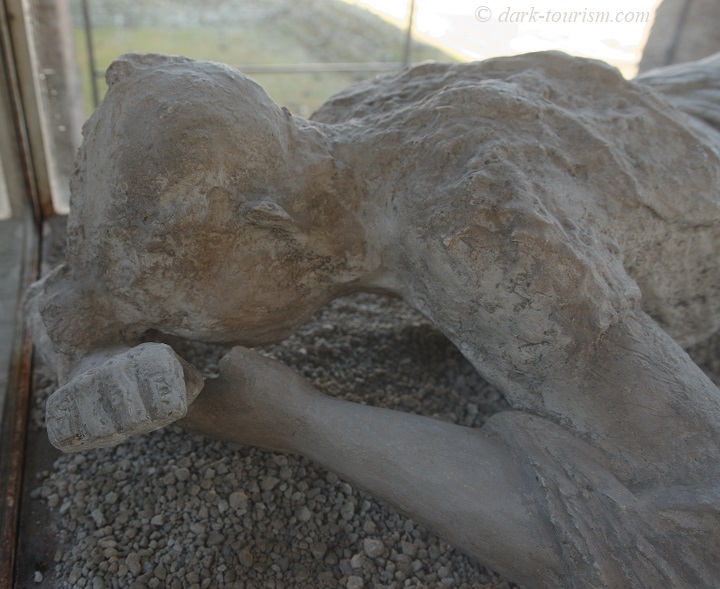
With that out of the way we can start a proper photo essay showing the dark attraction side of Pompeii. Hence the photos will be quite different from other familiar photographic coverage of the famous archaeological site with its buildings, statues, frescoes and suchlike. Instead I will concentrate only on the dark side, and in the case of Pompeii this primarily means those plaster casts of victims. These were first made during the the initial systematic archaeological excavations when hollows in the ash layer with skeletal human remains in them were discovered. The technique then applied, namely to fill the hollows with liquid plaster and once solidified dig the shapes out, is still in use today (though these days resin is used instead of plaster). That way casts of human victims (as well as some animals) were created that give an impression of their last moments, except that they are eerily white. Over a thousand victims have by now been found, and quite a few plaster casts of them are on display at the site.
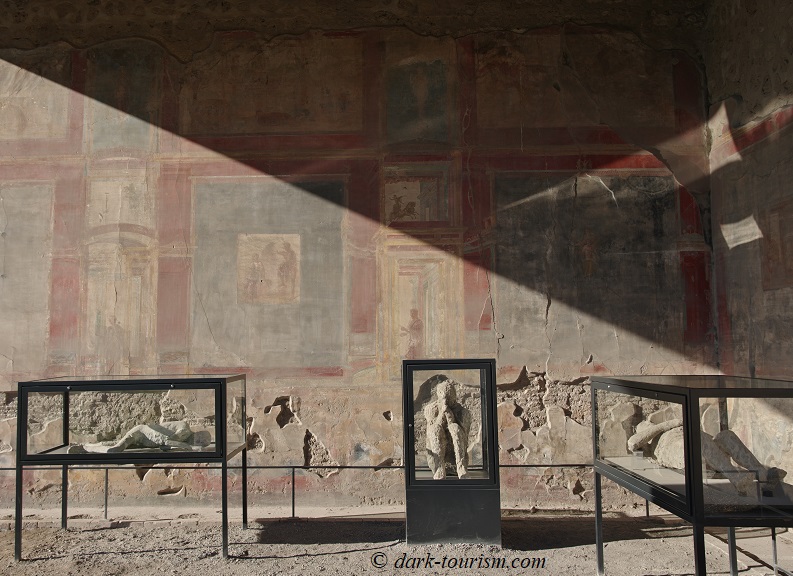
The first ones I came across during my visit was this set of three plaster casts in separate glass display cabinets in a place called the Macellum:
.
.
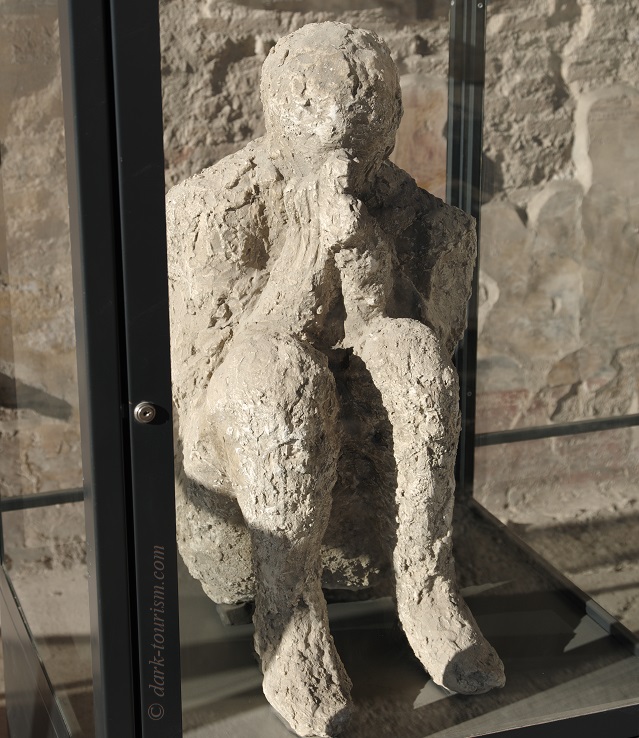
This set includes the unusual cast of a person sitting, with the head buried in the hands:
.
.
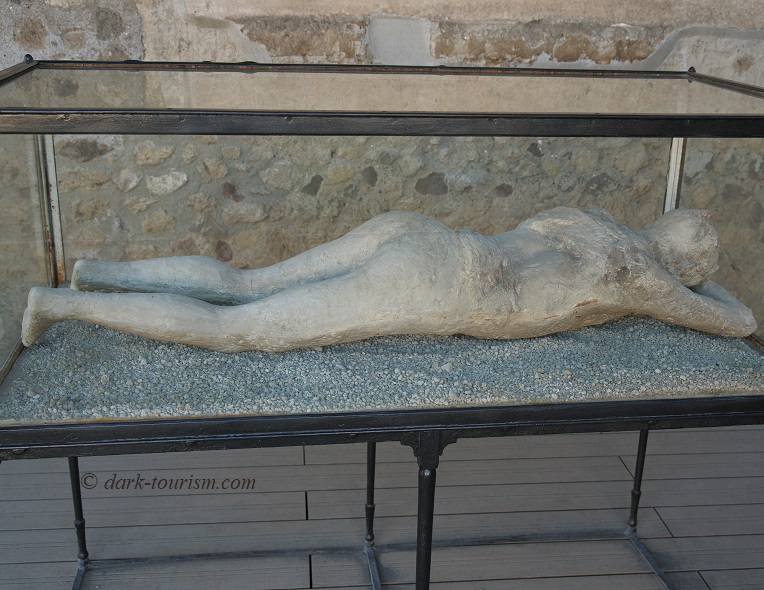
A much more typical posture in which the victims were found was lying on the ground, belly-down:
.
.
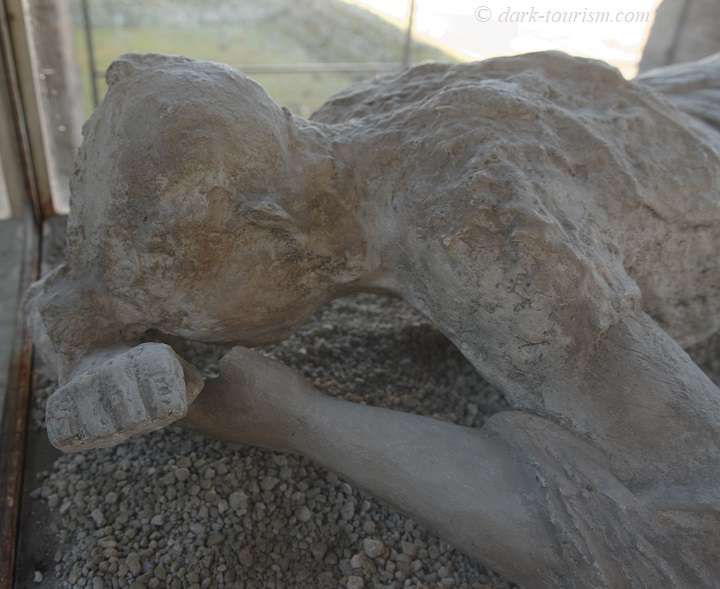
The hands are often placed over the face, presumably in a reflex effort to protect it … in vain (same photo as the featured one at the top of this post):
.
.
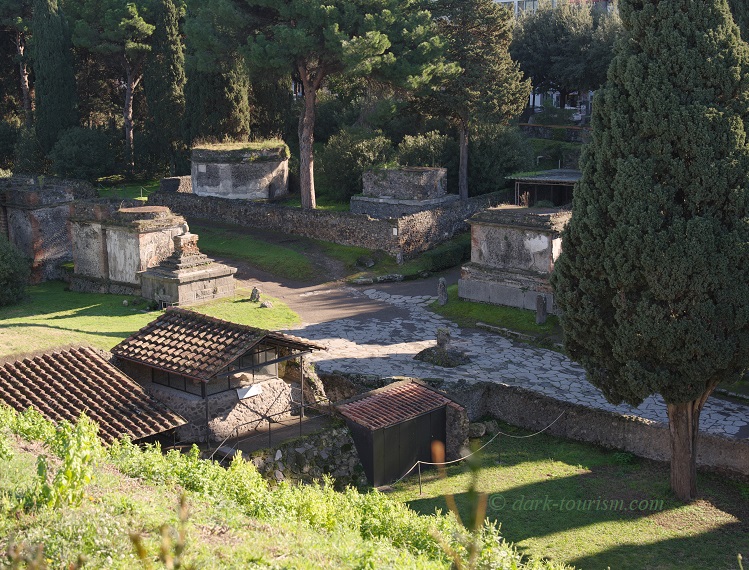
More plaster casts are to be found in the Necropolis di Porta Nocera with its grand tombs of wealthy Romans, namely in that building just off the centre of this photo with the tiled roof and open front:
.
.
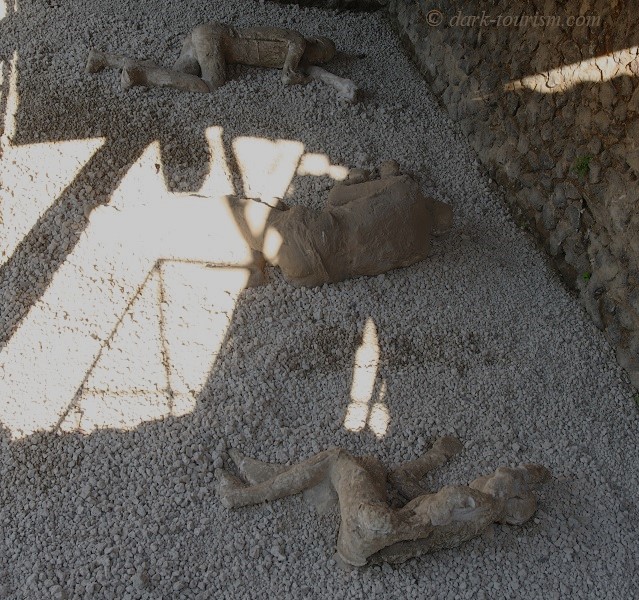
Here a group of three plaster casts are on near open-air display, presumably a small family, a child and its parents:
.
.
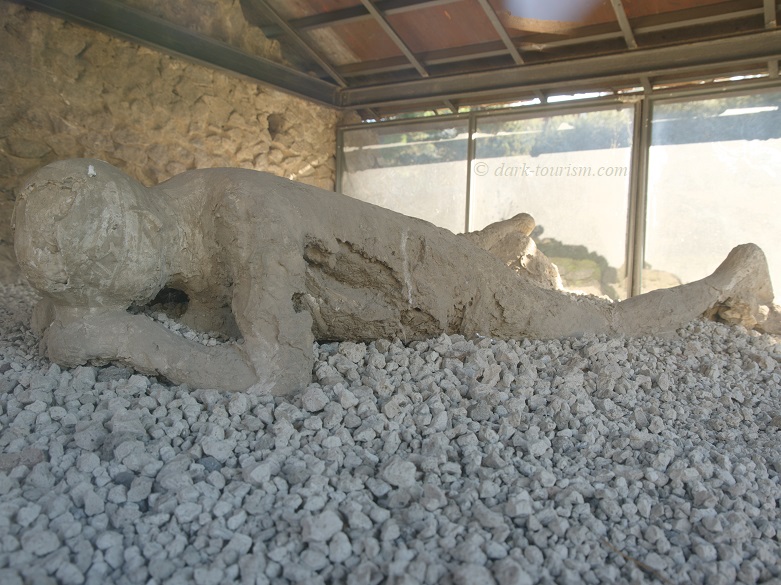
A plaque at this site speculates that these may have been Pompeians who tried to flee too late, after the ashfall had already reached a layer of 2.5m. While the child and mother are lying on their sides the father is in the more common position lying on his belly with hands clasped under the head:
.
.
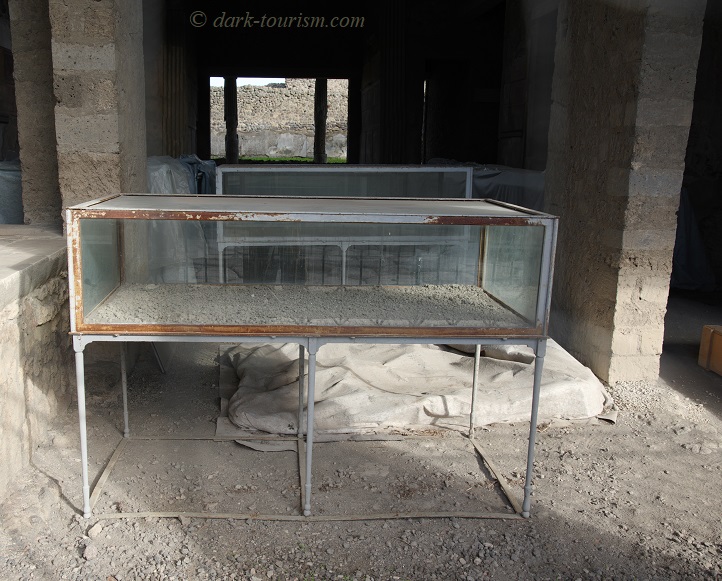
There are about a dozen locations in Pompeii that are marked on the map as displaying plaster casts. Except that when I visited last month about half of those locations were inaccessible due to ongoing restoration work. This included one location where the usual display cases were there, but empty, the plaster casts removed:
.
.
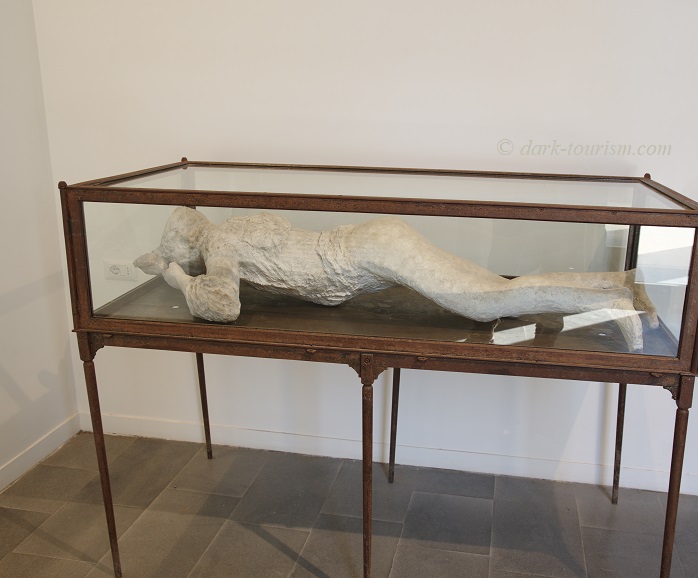
A whole collection of casts normally on display indoors at the Palestra Grande were also off limits during my visit, but another collection was to be found in the main museum part of Pompeii, called the Antiquarium, including this cast in the typical position:
.
.
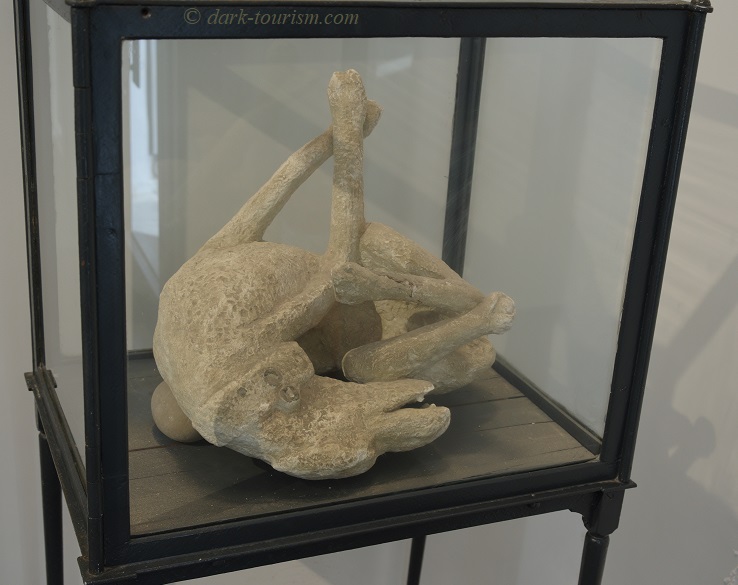
Included here is also a well-known plaster cast of a contorted dog, complete with collar, that seems to be illustrative of the agonizing death it died:
.
.
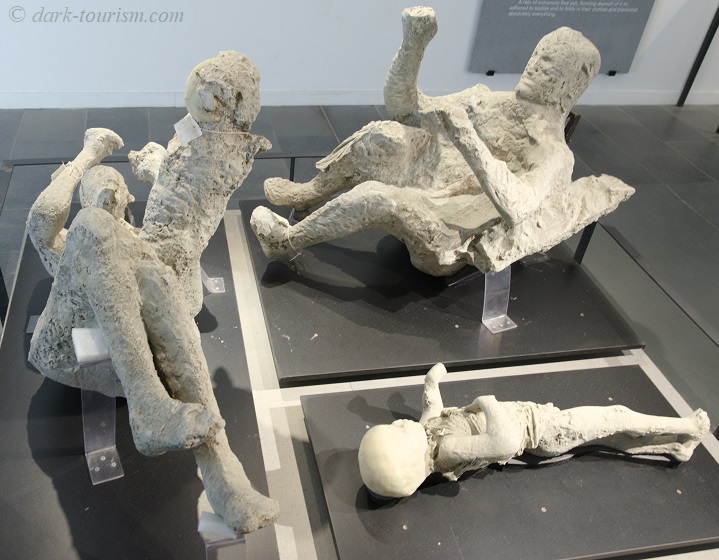
On display in the Antiquarium, too, is this group of plaster casts, another family of three with a small child:
.
.
Remarkably, these were not protected by a glass cover, so I wonder whether these particular plaster casts may perhaps be only copies.
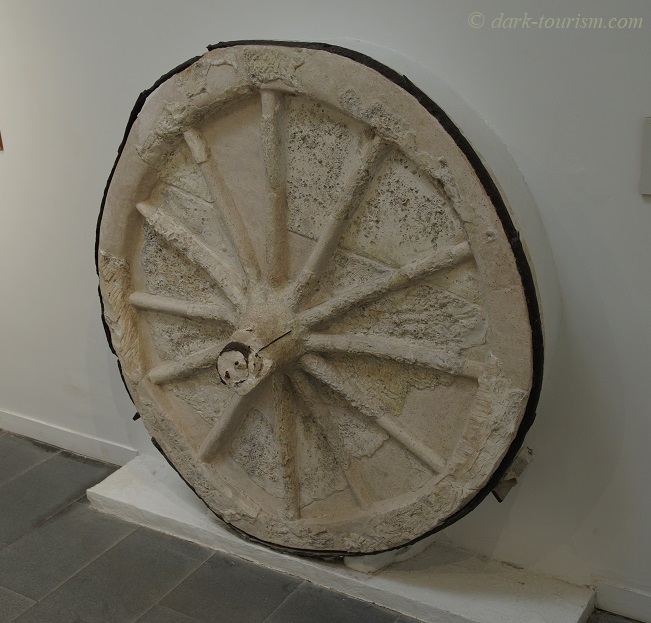
Plaster casts were not just made of victims (human or animal – allegedly there are also horses!) but also of some inanimate objects that had been incinerated by the volcanic eruption, including some wooden doors, whose casts were then placed in the position the original would have been. On display at the Antiquarium is a plaster cast of a cartwheel:
.
.
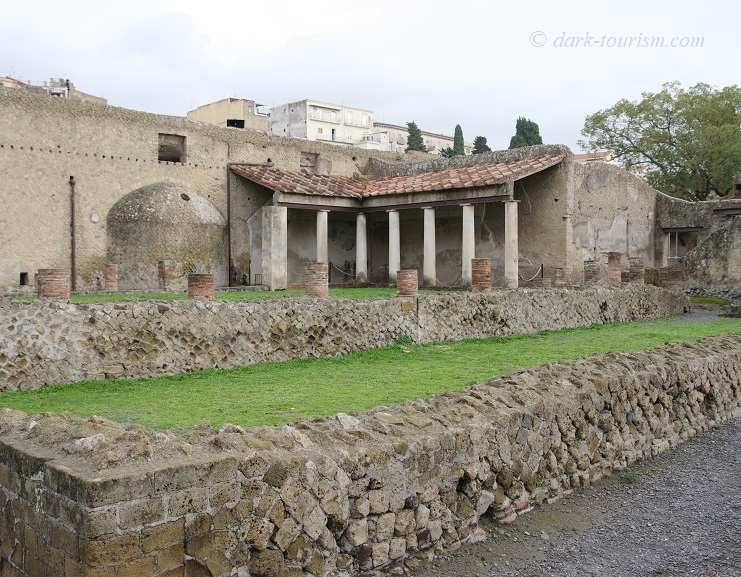
So much for Pompeii from a dark-tourism perspective (for the general and specifically archaeological perspective there are loads of other resources to refer to). Now for Herculaneum – first a general intro photo:
.
.
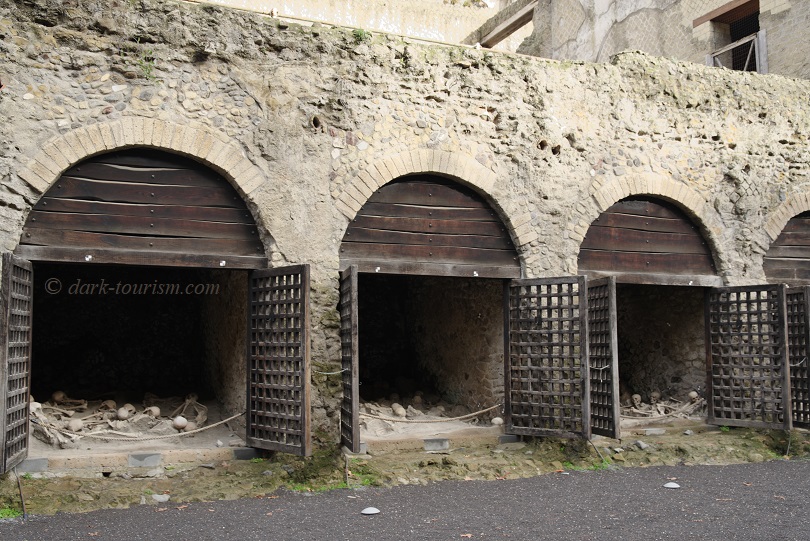
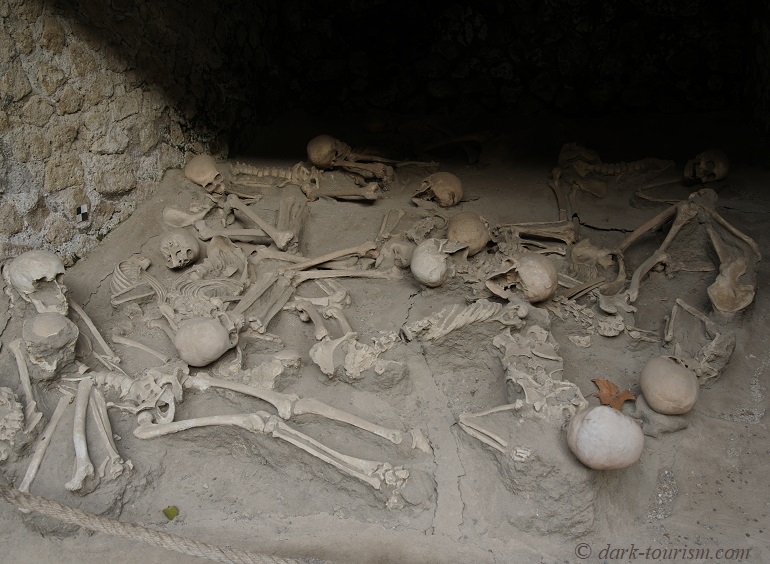
Herculaneum was smaller than Pompeii (estimated population around 5000) but even wealthier. As indicated above, it was hardly affected by the first phase of the Vesuvius eruption of 79 CE, so people had a better chance to flee. Still some stayed behind, or attempted to flee too late. In the excavation (not as complete as at Pompeii) the skeletal remains of some 300 victims were found in a row of what were boat shelters (Herculaneum used to be right on the coast back then), many with lots of valuables on them, so it is assumed that they took refuge here:
.
.
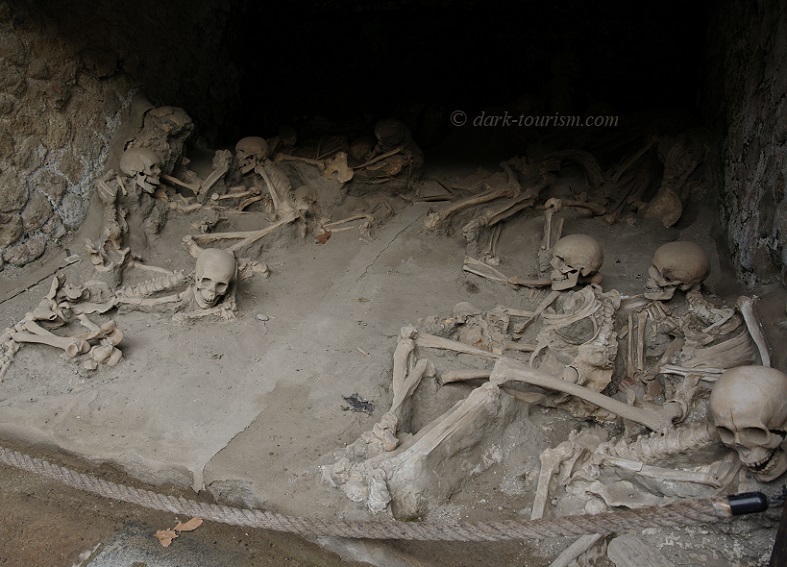
But in the second phase of the eruption, Herculaneum was engulfed in pyroclastic flows and surges – and there is no surviving those. They are fast-moving clouds of ash and superheated gas that kill everything in their path …
.
.
These skeletal remains opened up chances for modern forensic investigations (whereas the plaster casts of Pompeii contaminated those victims’ remains). It has been speculated a lot as to how exactly the victims died – asphyxiation, the weight of ash, burning … And it seems that it varies according to where the victims were and at what point in time during the eruption. But in the case of Herculaneum a recent study suggests that these victims were basically “cooked” by the heat of the pyroclastic flows (possibly after having already died of asphyxiation) – see this article, for example (external link, opens in a new tab).
The skeletal remains you see these days are not the originals, but have been replaced by copies made of resin, but it’s still a pretty gruesome sight to behold:
.
.
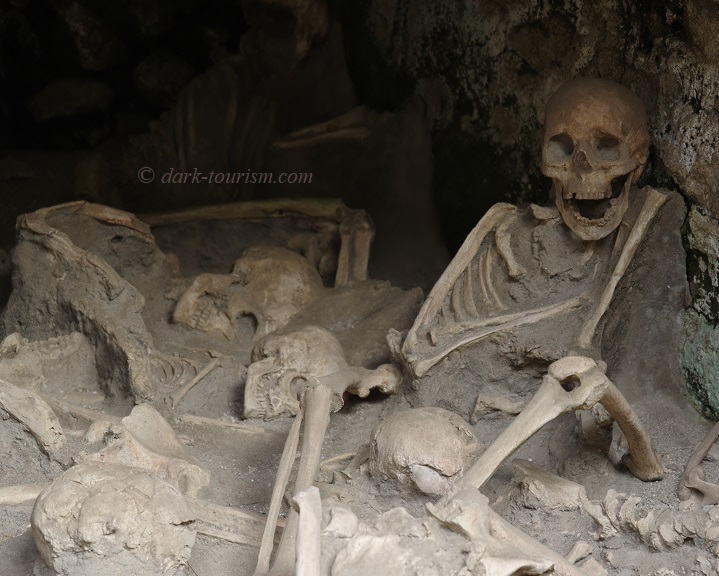
Some of the skulls invite over-interpretation, such as this one that seems to be “screaming”:
.
.
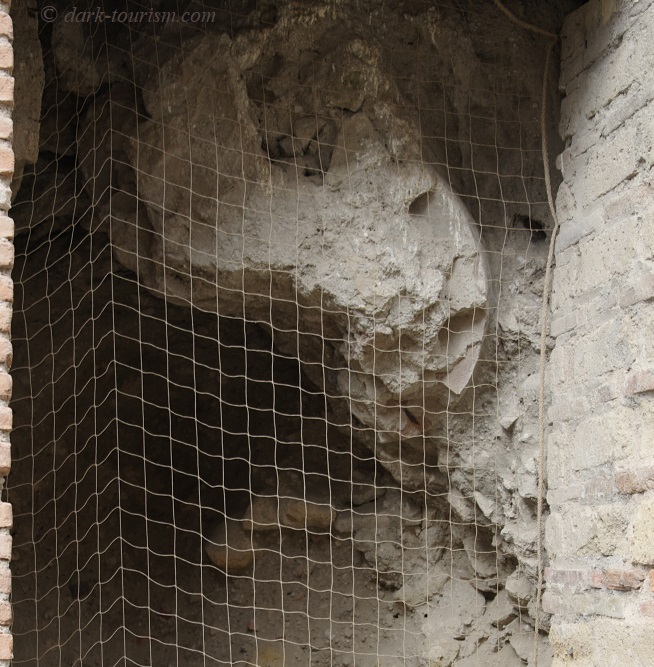
Even though Herculaneum largely escaped the pumice and ashfall that buried Pompeii, it is assumed that the city was covered by an even thicker layer of volcanic deposits from the series of pyroclastic flows. In one corner there was a chamber with what appeared to be unexcavated material, looking like this:
.
.
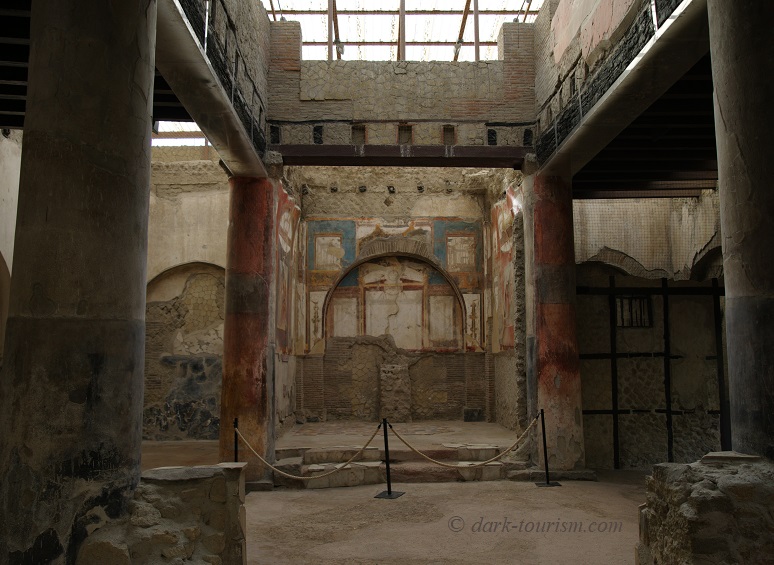
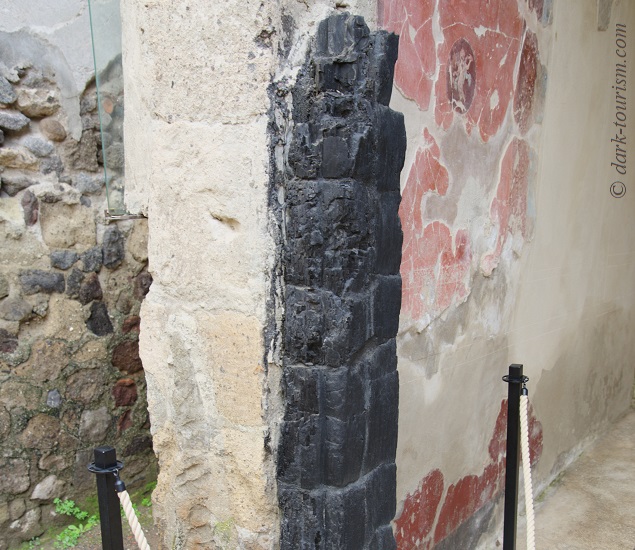
As Herculaneum wasn’t yet covered in ash, the heat of the pyroclastic flows hit the place unhindered and not only killed people but also charred materials like wood. In this rather grand half-timbered mansion the wooden beams are all black (and these days supported by modern superstructures made of steel):
.
.
Some you can get quite close to, such as this former column turned into charcoal:
.
.
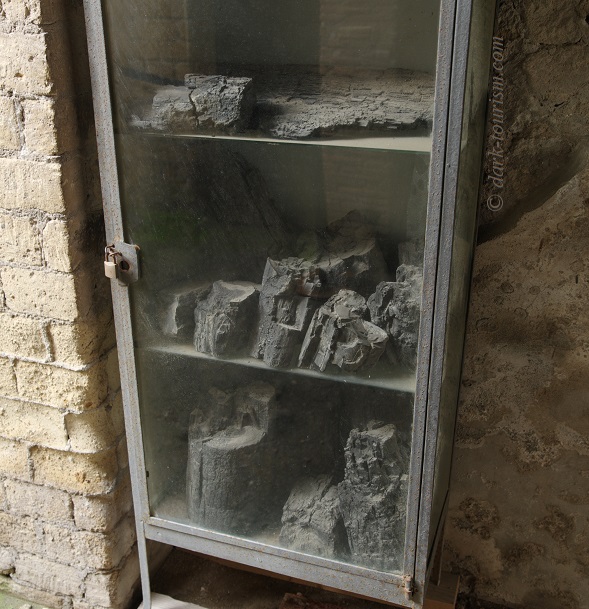
Nearby is a large glass display cabinet with assorted charred objects:
.
.
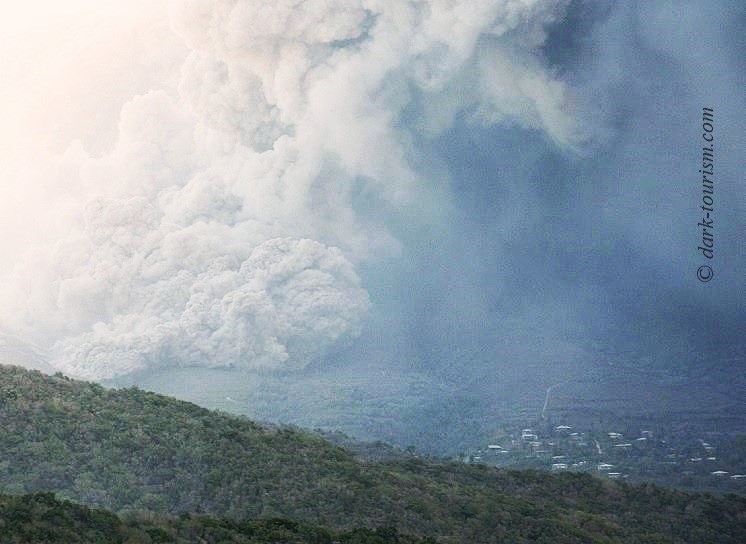
I’ve seen the effects of pyroclastic flows in a different location, namely on Montserrat in the Caribbean. Its former capital Plymouth (nicknamed the “Pompeii of the Caribbean”) is covered in think layers of ash from pyroclastic flows and subsequent lahars (mud floods from liquidized volcanic ash after heavy rainfall). And while I was there the local volcano Soufriere Hills had an active phase and I was lucky enough to witness a pyroclastic flow that turned into a pyroclastic surge (i.e. going even up over the crest of a hill). I observed this from a safe distance (at the MVO), but it was still a quite scary spectacle. Here’s an impression:
.
.
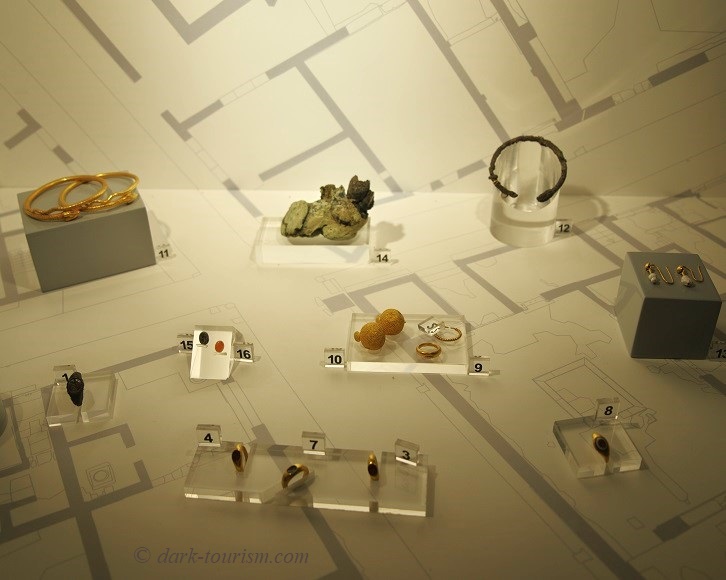
And finally, here’s a photo taken in Herculaneum’s Antiquarium (a wonderfully brutalist structure, by the way), namely of some of the valuables that were found with the victims in the boat shelters:
.
.
But with this I shall come to a close. I hope you enjoyed this rather atypical Blog post about what are probably the most fabled ruins from antiquity and at the same time a very dark site – of one of history’s worst volcanic disasters – complete with plenty of victims’ remains for evidence …