
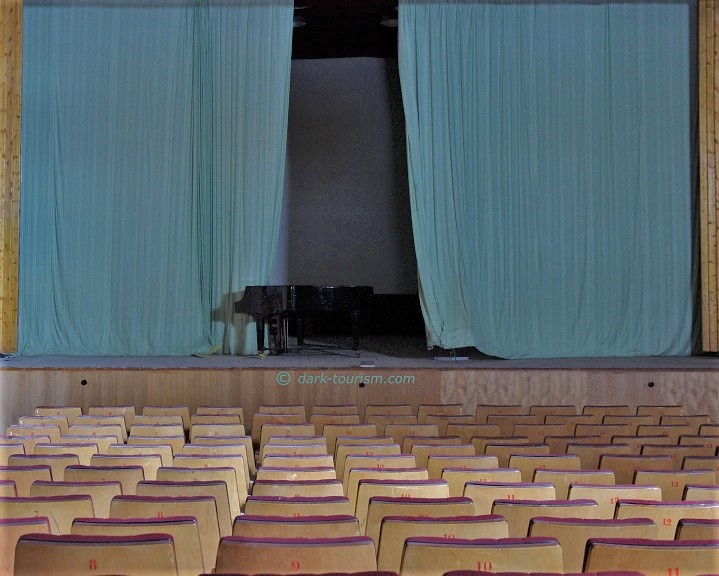
The 200th Blog Post
Another milestone! This is the 20oth post on this Blog, which I started almost exactly six years ago. These days I’m not posting as often as I had used to in the earlier years but the individual Blog posts have gradually become longer and more elaborate. Out of the 200 posts, ca. three dozen were “themed posts”. And to mark this anniversary I decided to pick 20 of my favourite photos out of those themed posts.
Going roughly in reverse chronological order, this first
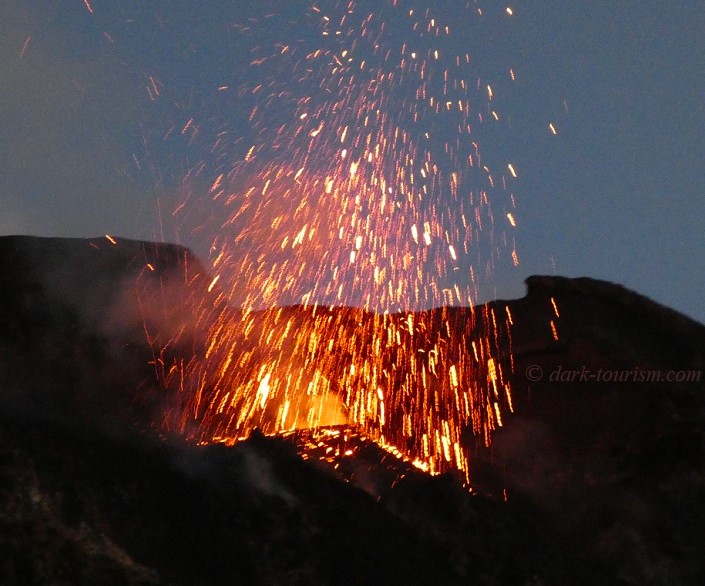
Stromboli
As promised in the previous Blog post that gave an overview of my recent trip to Sicily, now here comes the more specific post about what was the definite highlight of that trip: seeing Stromboli erupt (below you’ll find several more photos of the natural fireworks show!). The guided hike to the 400m viewing point was actually the very first thing I booked for my Sicily trip and only then built everything else around this.
First you have to get to Stromboli, of course. I planned the trip in such a way that
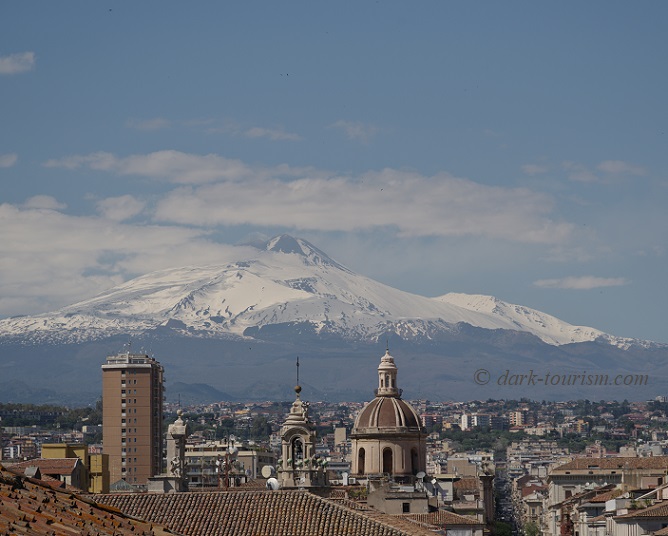
Back from Sicily
Late on Wednesday I returned from my 12-day trip to Sicily. When I say Sicily, though, I should clarify that I only scratched the surface of that large Italian island, having visited only its two largest cities, Palermo and Catania, as well as three of the Aeolian Islands, but saw nothing of the rest of Sicily other than the bits of landscape I was able to spot from the trains and ferries I used. In terms of dark tourism (DT), however, I almost exhausted what there is to do and see (as far as I am aware). The focus
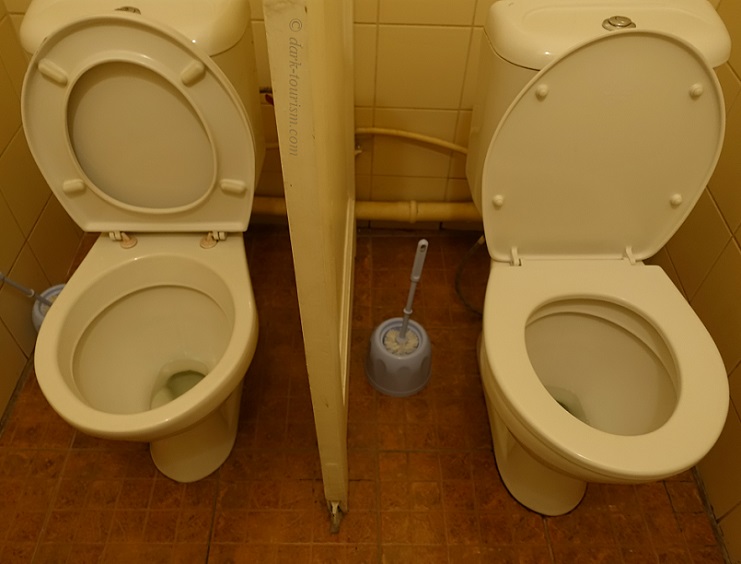
Dark Tourism & Toilets
At the end of the previous Blog post about the Ukraine war and how it has affected dark tourism (DT) I promised that I would find a less depressing topic for the next, this Blog post. And so I decided to revive the tradition of the themed post and picked the theme of DT & Toilets. That will have its lighter, even amusing aspects, though of course it’s still about dark tourism, and so must have its serious sides too. I’ll save the funnier ones for the end part of this post – so keep reading to the end!
Where to begin? Where can dark tourism and toilets overlap? Well, one thing you may
Four years of war and DT’s losses (and gains)
Russia’s war against Ukraine is now entering into its fifth year, after Tuesday’s fourth anniversary of the beginning of the aggression.
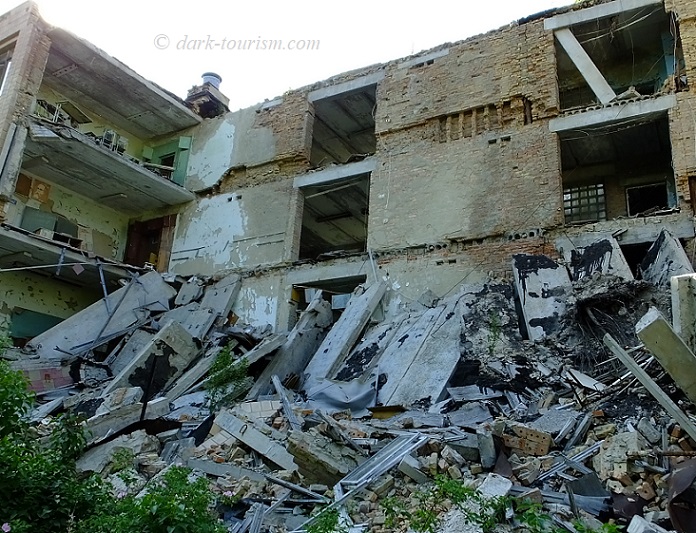
Here I will concentrate on how dark tourism (DT) has been affected, in particular what has been lost. It’s true that should this war finally be brought to an end and be followed by a stable peace, then Ukraine has the potential to add countless new destinations for dark tourists to visit. In a way that is
Pompeii & Herculaneum
As promised in the previous Blog post, with its overview of my recent trip to Naples, I now bring you a post that concentrates entirely on Pompeii and Herculaneum, both of which I visited from Naples as day excursions during that recent trip.
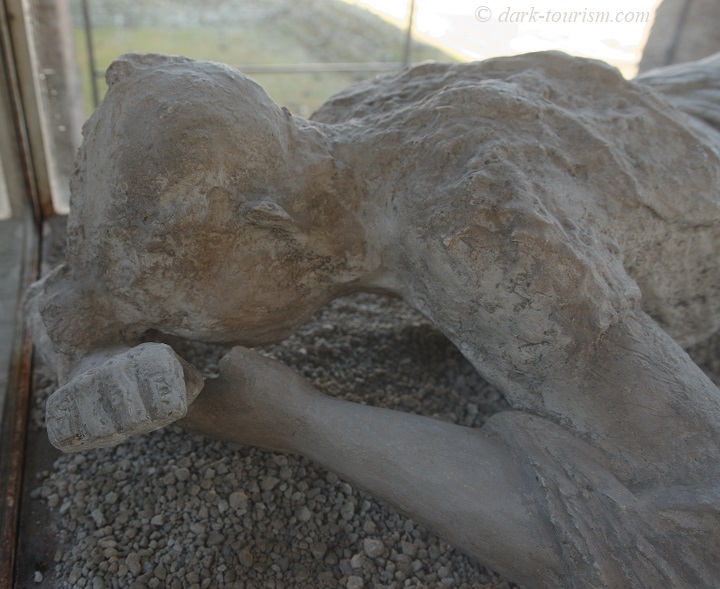
Both places were wealthy ancient Roman cities that were destroyed in a catastrophic two-day eruption of nearby Mount Vesuvius in (probably) October 79 CE. The first phase of the eruption produced a gigantic column of pumice and volcanic ash, which, when it collapsed, began to rain down volcanic material mainly over Pompeii, whereas