On this day, exactly one year ago, my big purge from Facebook started: after one post the day before on my topical DT page triggered an initial punishment of a one-month block from access, a whole barrage of further notifications resulted in a complete deletion of my personal account. My attempt to appeal ran aground. But the DT page as such remained visible for a whole month longer before that, too, disappeared. Five years of work, with material enough to fill a couple of books, was simply erased, without any explanation given or means of appeal functioning. Worst of all, that way I lost contact to the over 3000 followers my DT page had by that time, many of whom would have been potential buyers of my forthcoming book. But I can no longer announce the book’s release on that page directly to my ex-followers, and can only hope that a few may remember my website or may have found this blog. But I fear many people use only Facebook these days.
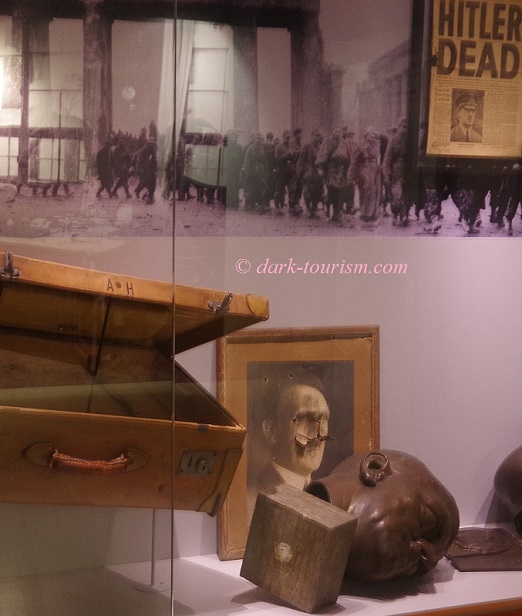
As part of my damage limitation efforts, I then set up this blog in May last year. Newsletter subscriptions are still far below the number of FB followers I had, but at least it’s a small community again, and is slowly growing. And the first blog post I put up here was the very one that first triggered Facebook’s brutality that then spiralled out of control the next day. That’s why I have reproduced it here as the featured photo above. It was taken at the Mémorial de Caen in Normandy, France, and shows a toppled bust of Adolf Hitler and a damaged portrait of the man, both displayed as evidence of the public venting their anger against the former occupiers after the liberation by the Allies in the wake of D-Day. Apparently Facebook didn’t like that idea of Hitler iconoclasm (which back in the Third Reich would have constituted “Führerbeleidigung”, ‘insulting the Führer’ – an offence that seems to live on on FB in a digital form).
What I was also able to do is build a reconstructed archived version of my former DT page, albeit only in static form with no ‘like’ or ‘share’ or ‘comment’ functions. But at least the primary content is for the most part visible again. Fortunately I had kept offline copies of the vast majority of posts. Only some posted from on the road, or posts that had been shares rather than originally written ones, could not be reconstructed.