Russia’s war against Ukraine is now entering into its fifth year, after Tuesday’s fourth anniversary of the beginning of the aggression. That makes it almost as long as WW1 and already longer than the USSR’s involvement in WWII was, which is still known in Russia as the “Great Patriotic War”. While for reference to the current war it is still mandatory in Russia to call it a “special military operation” (what an utterly, utterly stupid phrase!). Yet in reality it is a nasty war of attrition, as I already said on the first anniversary of the outbreak of this senseless war in this Blog post. And there doesn’t seem to be a real point in waging this war other than prolonging Putin’s grip on power, enforced by totally dictatorial means, suppression of any dissent and an all-pervasive propaganda machine dishing out indoctrination of the most unsavoury sort.
The Russia I encountered on my extensive summer trip there in 2017 no longer exists. Nor does the Russia that welcomed visitors from across the globe when it hosted the 2018 Football World Cup. It’s a different country now, and all for the worse.
I shouldn’t go back to repeating my initial remarks about the ludicrousness of giving as a reason for the aggression an alleged “denazification” of Ukraine (while the real Nazis in Germany, Austria, Hungary and elsewhere are actually quite pro-Putin), or dwell on Putin’s/Russia’s sickening Newspeak.
Instead I will concentrate on how dark tourism (DT) has been affected, in particular what has been lost. It’s true that should this war finally be brought to an end and be followed by a stable peace, then Ukraine has the potential to add countless new destinations for dark tourists to visit. In a way that is already the case, as I know of people who have travelled to Ukraine and from Kyiv went on tours with a local guide in Bucha and Irpin, sites of horrific Russian war crimes in the first phase of the war. And while such visitors may be welcome, I still cannot promote travel to active war zones, as I make quite clear on my main website in this section.
But for now let’s take a look at what has been lost for dark tourism as a result of the war in Ukraine.
First of all, we’ve lost what I considered my personal No. 1 top DT attraction: Chernobyl. Although the place is no longer occupied by Russian forces, the Chernobyl tourism industry, which had so flourished over the decade before the war, is now dead and gone. Whether it will ever come back, and if so in what form, remains pure speculation.
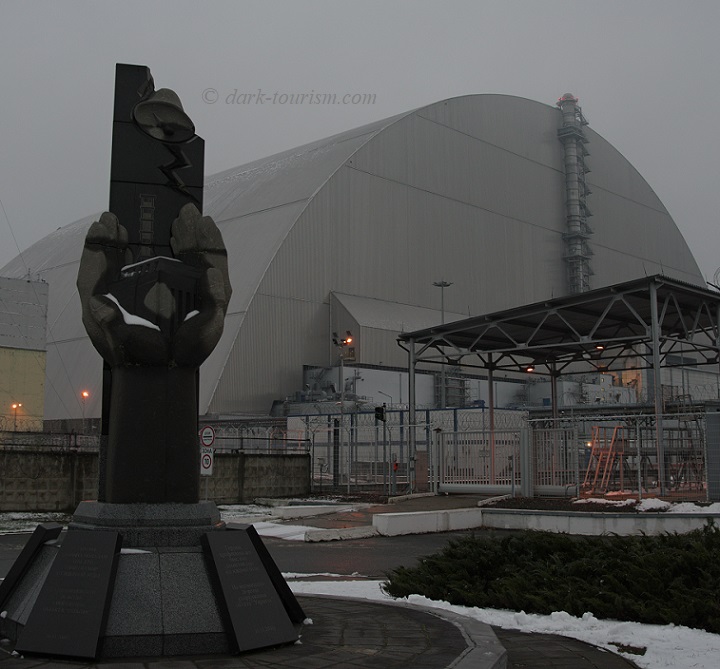
And Chernobyl even became a target in the war. Not only did Russian forces temporarily occupy the Exclusion Zone and the NPP, before they had to retreat from northern Ukraine, later in the war they even attacked the “New Safe Confinement” (NSC) structure that entombs the reactor block where the 1986 nuclear disaster happened – a drone tore a big hole in the outer layer, but fortunately did not penetrate through all the way. Still, it was a reckless and stupid attack. Here’s a photo of the block with its NSC as I saw it on my last visit to Chernobyl in November 2018:
.
.
I had been to Chernobyl twice before (first in 2006) and on my second visit in May 2015 even went on a tour of the inside, including the old control room of reactor block 2:
.
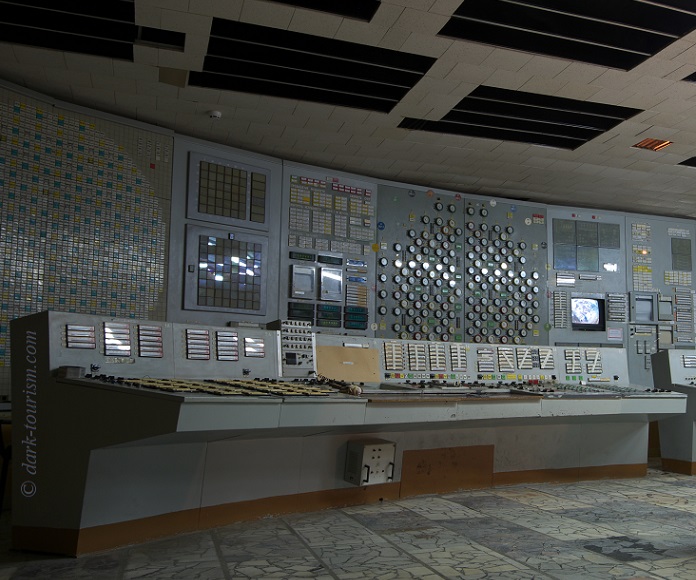
.
On that same visit we also went to the ghost town of Pripyat, of course, and this time saw a block of flats that had collapsed the year before:
.
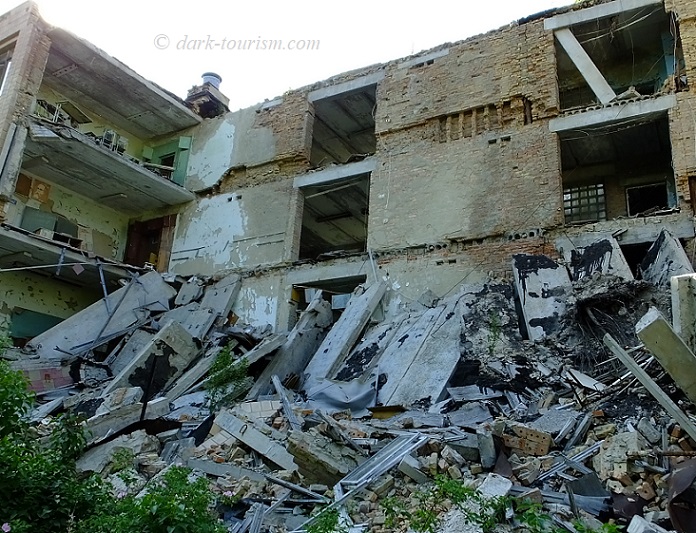
.
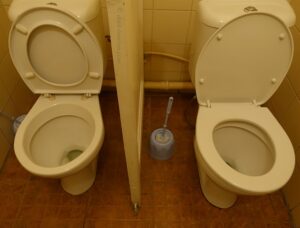
So this is NOT a war ruin, even though I used the same image as the featured photo at the top of this post to insinuate it might have been destroyed as a result of the war. Sorry if this has been misleading …
Yet it’s not like the Russians didn’t do any damage in Chernobyl. They did. And worst of all: they had soldiers dig trenches … including in the Red Forest, of all places, the by far most contaminated area of the whole Exclusion Zone! This also demonstrates the total disregard the Russian military leadership has for their own simple foot soldiers.
But the Ukrainians have also interfered with the integrity of the Zone, namely by removing the Soviet-era Lenin statue from Chornobyl (that sort of iconoclasm took place all over the country, though this was already allegedly the last Lenin statue that was left standing – until the war started). Here’s a photo of it from 2015:
.
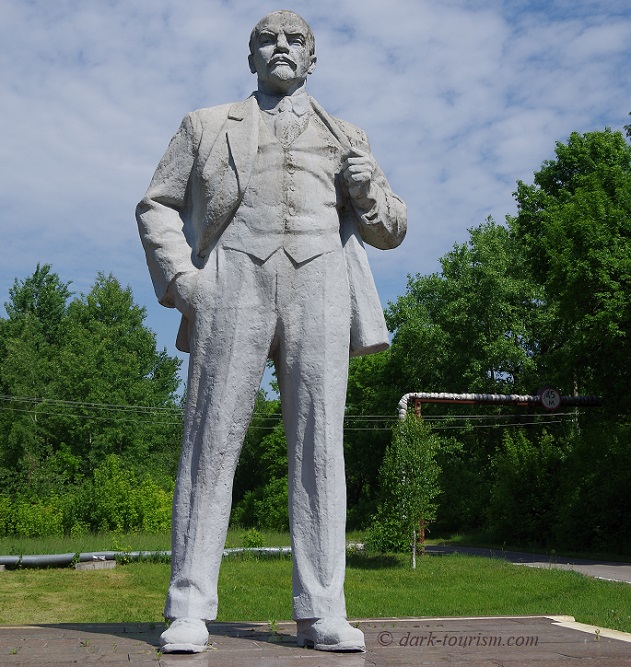
.
At least they haven’t (yet) toppled Kyiv’s giant Rodina Mat statue from the Brezhnev era – here is a photo of that, also taken in 2015:
.
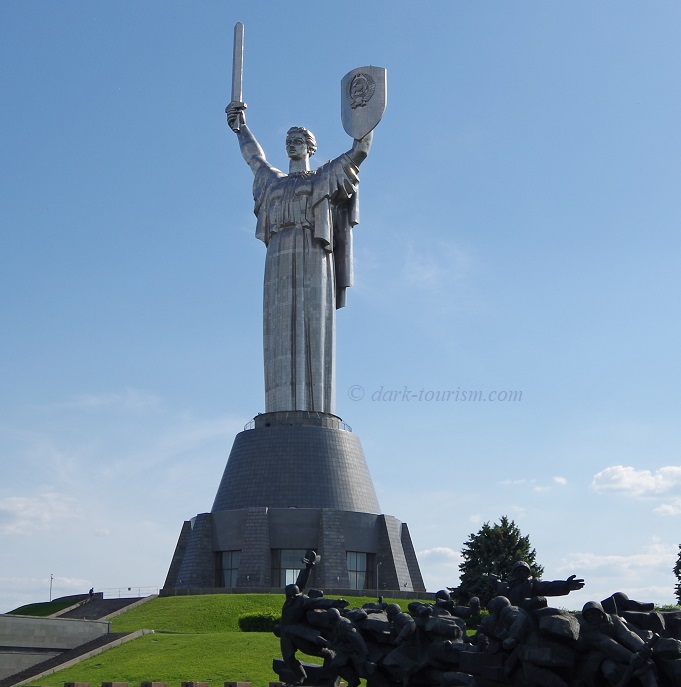
.
But what they did do is take the old Soviet coat of arms down from her shield and replaced it with the Ukrainian national trident symbol coat of arms.
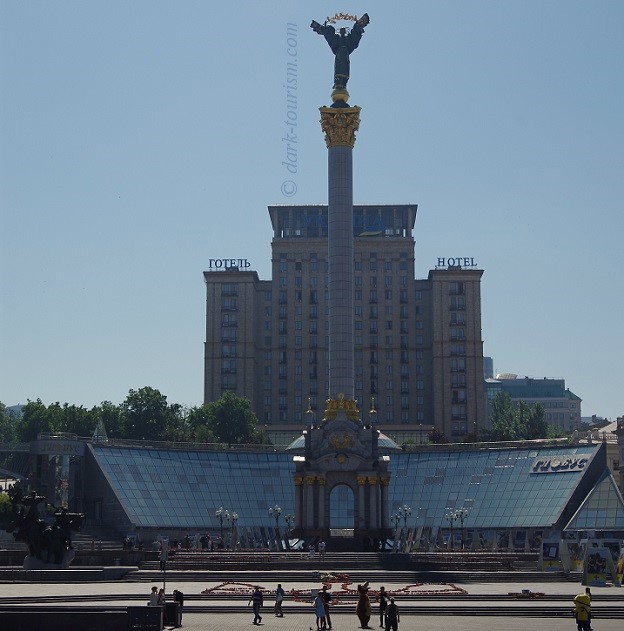
You can see an indication of that same symbol also in the next photo, taken at Kyiv’s legendary main square, the Maidan, also in 2015. The symbol is formed by red candles:
.
.
The candles were part of a commemorative ensemble. On the one hand that was in memory of the victims of the Euromaidan of February 2014. On the other it was about the subsequent annexation of Crimea by Russia (now seen by many as the actual beginning of the current war). Today this square is the main memorial site for those Ukrainians killed in the war.
Note the building in the background. This is the old Hotel Ukraina, where I actually stayed during my visit in November 2015 and had a room overlooking the square (like journalists during the Euromaidan). I’ve meanwhile read that this classic post-Stalinist pile may be threatened with demolition. I hope that’s only a rumour … It would be a sad loss.
But now let’s take a look at Russia, where dark tourism has also seen losses. Well, in a way the whole country is lost from a Western tourist’s perspective for now. There are no more direct flights nor trains from Western Europe, so getting to Russia these days requires a more convoluted journey, e.g. via Armenia. But first you’d have to obtain a visa, and that is tricky for somebody from a country Putin designates as “unfriendly”. Not that I’d really want to visit again under the current circumstances.
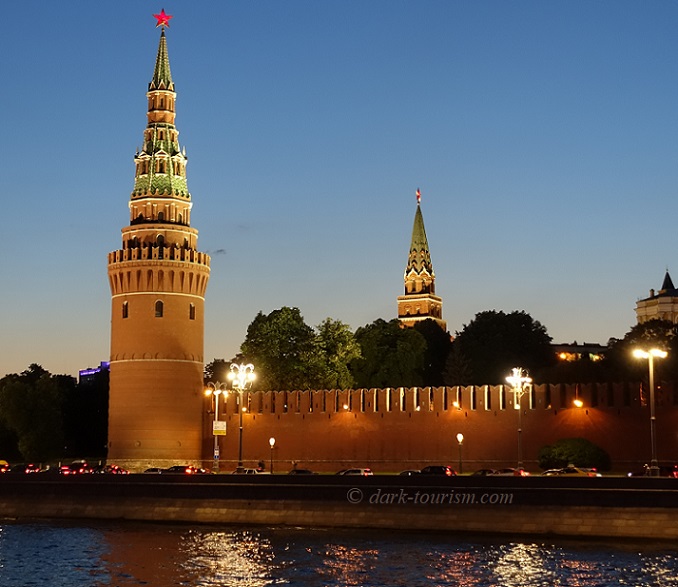
As I said above, I last visited Russia in the summer of 2017 (my fourth and longest visit), when it was still relatively easy, Western tourists were welcomed, and even though there was already some oppression, it was still quite an open society, with many Western elements in fact; but not yet so totally in the grip of Putin’s propaganda and repression machine as it is now. One evening in Moscow I took this photo of the Kremlin, which is of course Putin’s power centre:
.
.
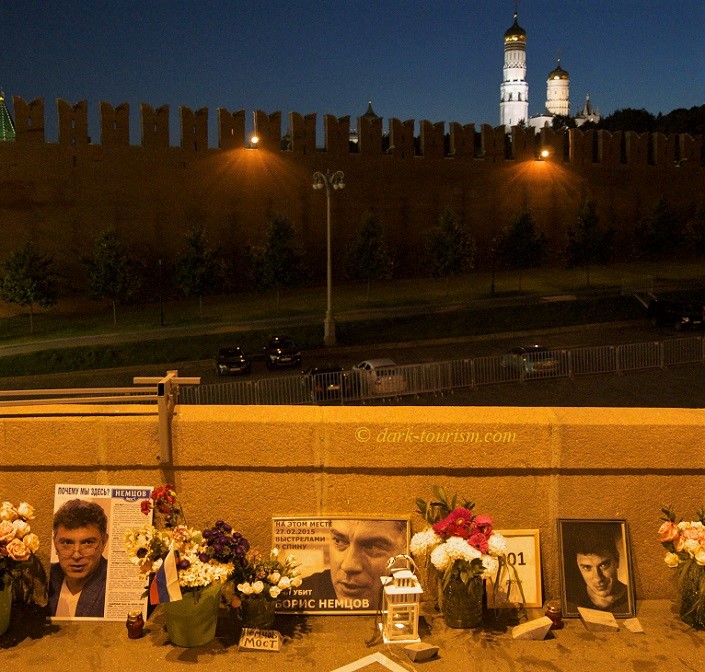
On the bridge leading to Red Square there was at the time still a grass-roots memorial for dissident Boris Nemtsov, who had been murdered on this spot in February 2015:
.
.
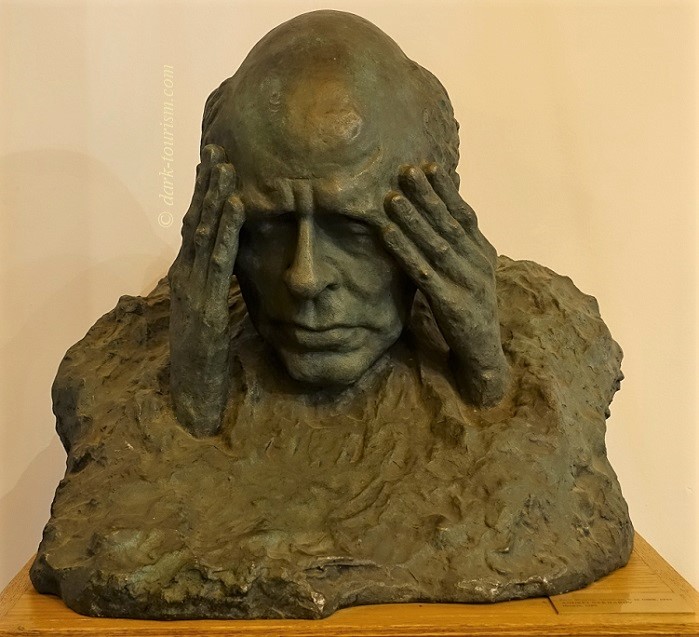
I very much doubt that this memorial is still there. What I know for sure is that the Sakharov Centre was liquidated by the authorities. It started with a statement released by the Centre in March 2022 that condemned the attack on Ukraine in strong words – after which first its rental agreement was terminated, then it was designated a “foreign agent”, and in January 2024 it was liquidated in its entirety. Here’s a photo of a bust of nuclear-scientist-turned dissident Andrey Sakharov that was on display at the centre (this photo, and the next one, already featured in a Blog post called “Russian Reflections” that I posted in March 2022):
.
.
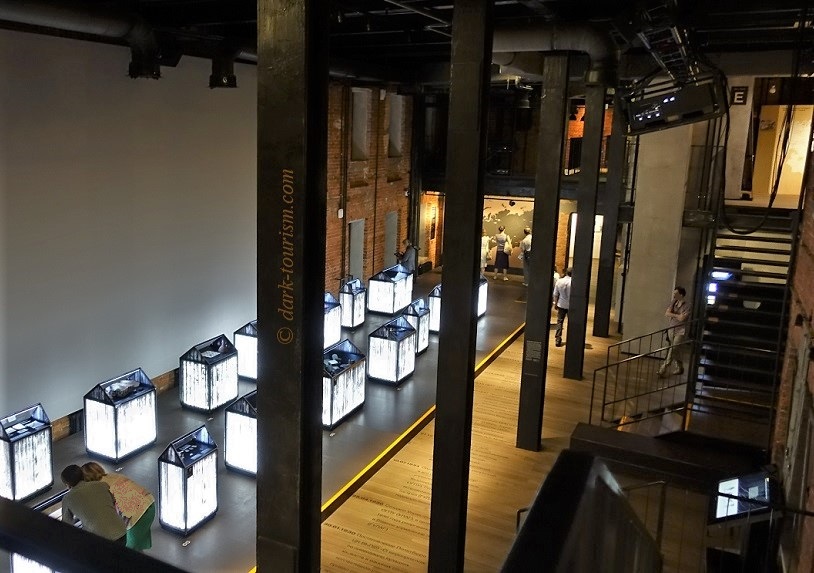
The Gulag History Museum, meanwhile, was closed too, under a lame pretext of “fire safety reasons”, in November 2024. Shortly after its director was fired. And now I’ve just read that a “Memory Museum” about crimes committed by the Nazis during the “Great Patriotic War” is to replace the Gulag Museum. Yet another puzzle piece in the ever more suffocating takeover of the truth by the current propaganda machine. Here’s a now historic photo of the inside of the Gulag History Museum taken in 2017:
.
.
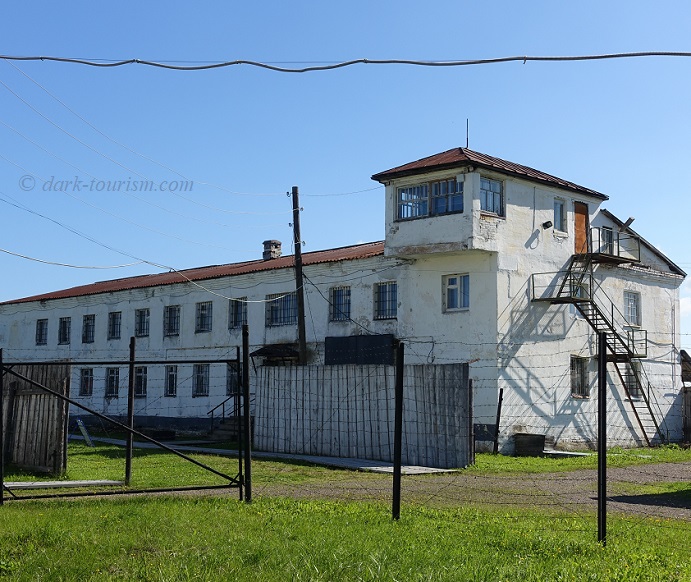
I now wonder what will happen to the only proper Gulag site within Russia that was turned into a memorial on that topic: Perm-36. Formerly an independently curated institution it was already under threat and eventually appropriated by the authorities, who then proceeded to meddle with the narrative and make changes to its displays. When I visited in 2017 it was nevertheless still clearly a Gulag museum. But whether that can continue now is doubtful. The website of the original curators before the takeover (now all in exile) claims that the site was turned into something “glorifying Soviet forced labor camp system” (see here – external link, opens in a new tab). Here’s a photo of the main building of Perm-36 that I took in the summer of 2017:
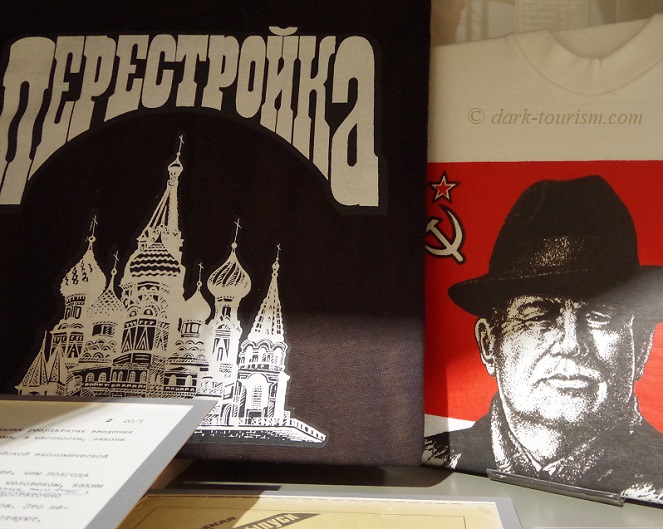
And while school textbooks on history are being rewritten in Russia, so will many other history museum narratives. In 2017 I also visited the Contemporary History Museum in Moscow, and amongst its exhibits was this:
.
.
Here you see an image of Mikhail Gorbachev and next to it a poster advocating “perestroika”, a Gorby policy pretty much the opposite of what is currently going on in Russia. So, again, I’m wondering whether this part of the museum will also have been “sanitized”. When I was there one section was about the “reunification of Crimea with Russia”. You get my drift. It was already on an Orwellian path …
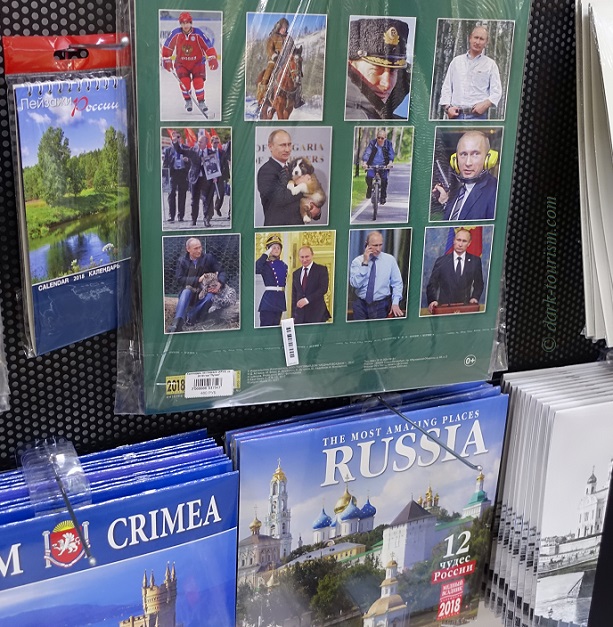
At the “Great Patriotic War Museum” at Park Pobedy in Moscow, the large gift shop already in 2017 had various items glorifying Putin, Russia’s military and, yes, the takeover of Crimea. Just look at this photo:
.
.
I could well imagine that such glorifying merchandise will have only increased by now. Outside the museum, incidentally, was a monument that seemed to me to be quite symbolic of the current re-Sovietization of Russia:
.
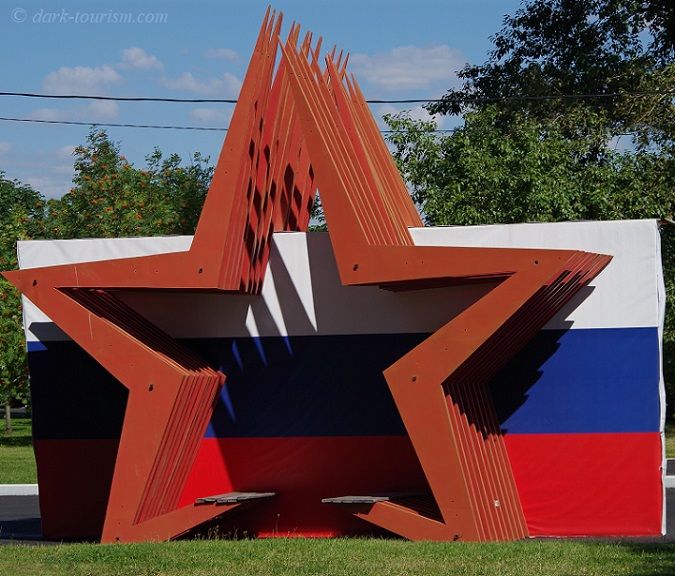
.
The war has also left a mark on places outside Ukraine and Russia proper, such as at the Russian-run mining town of Barentsburg in Svalbard. Here’s a photo I took in 2012 when I was there:
.
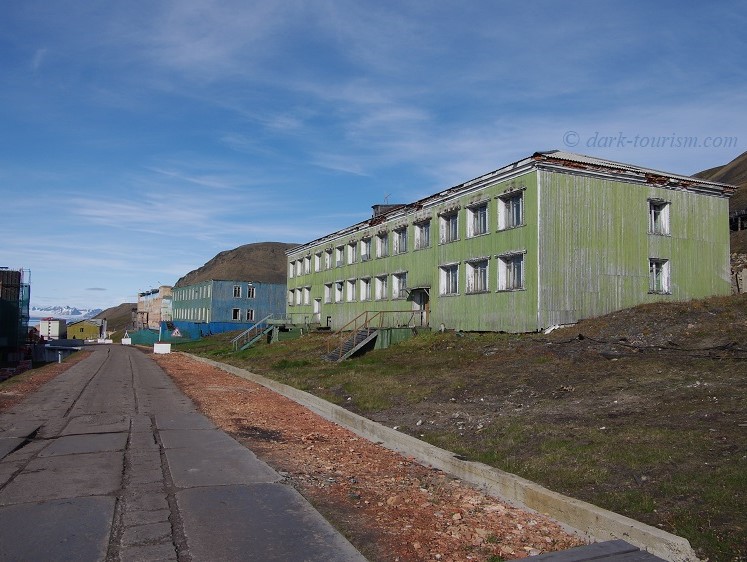
.
As I reported in this earlier Blog post, there are apparently now all manner of war propaganda efforts that have changed the character of this place.
And finally here’s a photo taken from the Blog post that I uploaded literally the day before the start of the war, i.e. on 23 February 2022:
.
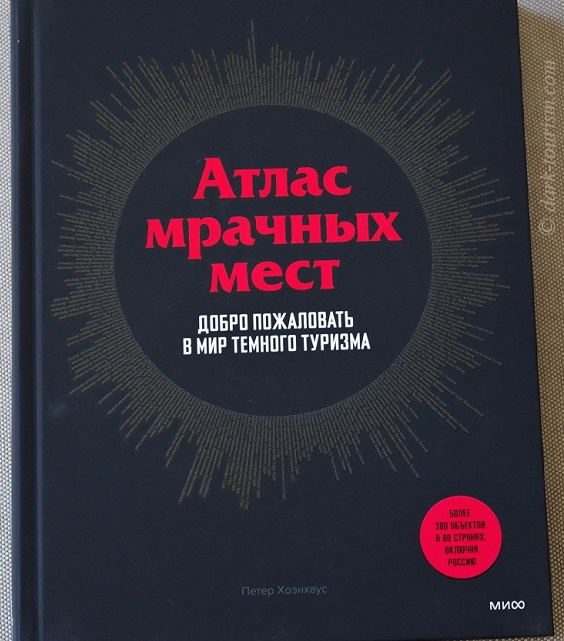
.
It’s so ironic that I would receive the author’s copies of my book Atlas of Dark Destinations in the Russian translation that day, by Russian post!
I knew from the publishers of the original version that the Russians already wanted to bowdlerize a few sections (e.g. taking out the reference to the Malaysia Airlines aircraft that was shot down over eastern Ukraine) and swap a few photos (e.g. replacing the image of the infamous Lubyanka with one of the Ostankino TV tower). And that they did.
I guess that by now various other photos and text passages in my book would no longer pass Russian censorship either. And indeed, I just checked the Russian publishers’ website, where my book in Russian still features but is marked as “unavailable”. Another loss to DT, then, and this time quite a personal one …
But with this I shall bring this Blog post to a close. I will try to come up with something a bit less depressing in the next Blog post.
.
———————-
Postscript: I’ve just learned that a new “Ukraine Museum” about the war has just opened in Berlin, namely at the Berlin Story bunker – see the official website here (external link; opens in a new tab). So here we have a case of an actual gain for DT to have come out of this war.
———————-